
dog
furryfable
pet care
Dog Car Seat Belts: Safety vs. Gimmick? Ragnor Tested!

Driving with your dog unrestrained in the car presents significant risks, not only to your dog but also to human occupants. In the event of a sudden stop or collision, an unrestrained 60-pound dog can become a projectile exerting over 3,000 pounds of force. This force can cause severe injury or even fatality to both the dog and any human passengers. Beyond the immediate danger, even minor accidents or sudden braking can send a dog sliding, falling, or colliding with the car's interior, leading to injuries like fractures, concussions, or spinal trauma. For breeds like Golden Retrievers, who have a notable predisposition to hip and elbow dysplasia, uncontrolled movement during transit can exacerbate existing joint conditions or contribute to new ones, particularly in their hips, where prevalence can range from 53% to 73% in the breed. Similarly, Doberman Pinschers, with a 58.2% cumulative prevalence of dilated cardiomyopathy (DCM), are susceptible to cardiac events, and the stress of an accident, even a minor one, could be extremely detrimental. Greyhounds, known for their delicate bone structure and susceptibility to injuries like fractures and spinal trauma from high-speed collisions, require particular attention to secure restraint during car travel. The question isn't whether to restrain your dog, but how to do it effectively and safely.
Quick Answer: Are Dog Car Seat Belts Safe or a Gimmick?
Reputable dog car seat belts, specifically those crash-tested and certified by independent organizations like the Center for Pet Safety (CPS), are a vital safety measure, not a gimmick. Many products on the market claim to offer safety, but only a select few have undergone rigorous dynamic crash testing that simulates real-world accident conditions. These certified restraints significantly reduce the risk of injury to your dog and other vehicle occupants by preventing the dog from becoming a projectile in a collision. Avoid any restraint that hasn't demonstrably passed such tests, as they may offer a false sense of security and fail catastrophically when needed most.
The Critical Need for Dog Car Restraints
The concept of restraining a dog in a vehicle is not merely about preventing distraction for the driver, though that is a significant benefit. It is fundamentally about crash safety. A dog unrestrained in a moving vehicle is a serious hazard. In the event of an accident, dogs can sustain severe spinal cord injuries, which can result from trauma such as car accidents, falls, or dog fights. These injuries can include fractured vertebrae, severed spinal nerve tissue, or dislocations, leading to pain and loss of mobility. For a large breed like a Golden Retriever, which can weigh up to 75 pounds, the forces involved in a 30 mph crash are immense. Even if the dog survives the initial impact, internal injuries, often unseen, can be life-threatening. Dobermans, with their deep chests, are at a higher risk for conditions like bloat (Gastric Dilatation-Volvulus or GDV), and the physical stress of being jostled or impacting surfaces in a car could potentially trigger or exacerbate such a condition. While bloat is more commonly associated with eating habits, stress is also a contributing factor. Greyhounds, with their lean build and propensity for bone fractures, are especially vulnerable to trauma during sudden stops or collisions. Even minor impacts can lead to significant orthopedic damage.
Understanding "Crash-Tested": What it Really Means
The term "crash-tested" is frequently used in marketing, but its meaning can vary wildly. Unlike child safety seats, which adhere to strict Federal Motor Vehicle Safety Standard (FMVSS) 213, there are no equivalent federal regulations for dog car restraints in the United States. This means manufacturers can conduct their own tests with varying methodologies and often undisclosed results. Many early "crash tests" simply measured whether the harness broke, not the forces exerted on the dog or its overall well-being. This is why independent certification is crucial.
The Center for Pet Safety (CPS) has emerged as the leading independent authority in this area. They conduct dynamic crash tests using specially designed, weighted dog-sized crash test dummies that simulate real-world accidents at 30 mph, applying the same FMVSS 213 standards used for child seats. Their testing evaluates several critical factors:
- Excursion Distance: How far the dog dummy moves inside the car. While important for human safety, CPS recognizes this alone is insufficient for assessing dog safety.
- Structural Integrity: Whether the harness and its components remain intact during the crash.
- Control of Rotation: Preventing the dog from flipping or twisting, which can lead to severe spinal injuries.
- Impact with Surfaces: Ensuring the dog does not make forceful contact with hard surfaces within the vehicle cabin.
- Biomechanic Anthropomorphic Restraint Kinetics (B.A.R.K.) Standard: A newer set of metrics developed by some experts to evaluate head injury criterion (HIC) and whiplash reduction, among other factors.
A significant study by CPS and MGA Research, an independent testing firm, found that 25 out of 29 dog harnesses tested failed to prevent the dog from becoming a projectile in a 30 mph crash. This highlights the stark reality that many products marketed as "safe" are anything but. For Golden Retrievers, who have a higher center of gravity compared to some other breeds, controlling rotation and preventing impact is particularly vital to protect their joints and spine, given their predisposition to orthopedic issues. Dobermans, with their athletic build, can generate substantial force if unrestrained, making a truly effective restraint paramount to prevent potential internal trauma, especially considering their cardiac vulnerabilities. Greyhounds, with their thin skin and minimal body fat, are prone to lacerations and bruising in addition to fractures, making a well-padded and secure harness essential.
What to Avoid: Gimmicks and False Security
I strongly advise against any dog car seat belt or restraint that:
- Lacks independent crash test certification: If a product doesn't explicitly state it's CPS certified or has publicly available, detailed crash test results from a reputable independent lab, avoid it. Manufacturer-conducted tests without external validation often lack transparency and rigor.
- Attaches solely to a standard collar: A collar is designed for leash control, not crash protection. In a collision, a collar attachment can cause severe tracheal or cervical spinal injuries. For Dobermans, whose necks are strong but still vulnerable to sudden, immense pressure, this is a non-starter. Golden Retrievers can also suffer serious neck injuries from collar-only restraints.
- Uses flimsy hardware or stitching: Inspect the buckles, D-rings, and webbing. They should be robust, automotive-grade materials designed to withstand significant force. Cheap plastic buckles will fail.
- Allows excessive excursion: Even if a harness holds, if it allows the dog to be thrown forward significantly, it still poses a risk of impact injuries with the seats or dashboard.
- Is a simple "zip line" or tether without a crash-tested harness: While these can prevent a dog from roaming the car, they offer no impact protection and can concentrate forces on a small area of the dog's body during a crash.
What to Look For: Genuine Safety Features
When selecting a dog car seat belt, prioritize these features for the safety of your Golden Retriever, Doberman, or Greyhound:
- CPS 5-Star Certified: This is the gold standard for safety gear. Products like the Sleepypod Clickit Sport Harness have earned this rating, demonstrating superior performance in crash simulations. The Sleepypod Clickit Sport Harness, for example, is designed with a three-point contact system similar to human seatbelts, securing the dog's torso and distributing forces across a broad, padded vest.
- Broad, Padded Chest Plate: This is crucial for distributing impact forces across the strongest part of a dog's body, minimizing pressure on delicate areas like the neck and abdomen. For a deep-chested Doberman, a chest plate that measures at least 4-6 inches wide is ideal. For a Golden Retriever, a minimum of 5 inches wide helps protect their sternum and ribs. Greyhounds benefit from broad padding to shield their lean frames from direct impact.
- Automotive-Grade Materials: Look for strength-rated hardware (metal, not plastic) and high-quality webbing that can withstand significant tensile strength. Some harnesses, like the Kurgo Impact Harness, are constructed of 4,000-pound tubular webbing and all-steel buckles.
- Multiple Attachment Points: A harness that integrates with the vehicle's seatbelt system at multiple points (e.g., LATCH anchors or seatbelt pass-throughs) offers better stability and force distribution.
- Comfort and Fit: A safe harness must also fit correctly. It should be snug enough to prevent excessive movement but not so tight as to restrict breathing or movement. Ensure there are no pinch points or areas that could chafe, especially for short-coated breeds like Greyhounds and Dobermans. Consider a harness that doubles as a walking harness for convenience during stops.
Ragnor's Picks: Why We Chose These for FurryFable
At FurryFable.com, our selection process for pet outdoor supplies is rigorous, focusing on genuine safety and durability. We understand the specific needs of different breeds and prioritize products that meet the highest standards. When it comes to dog car seat belts, we look for evidence of independent crash testing and construction quality that truly protects. Products featured in our collection, such as the FurryFable Heavy-Duty Dog Pooper Scooper Kit - Rake, Bin, Bags, exemplify our commitment to practical, durable solutions for pet owners. While a pooper scooper doesn't directly relate to car safety, it reflects our overall standard for robust, long-lasting gear. Similarly, our FurryFable Square Pet Water Fountain | Silent & Multi-Layer Filter highlights our dedication to health and well-being, which extends to ensuring safe travel.
For car safety, we specifically recommend harnesses that have undergone and passed rigorous dynamic crash testing by organizations like the Center for Pet Safety. These harnesses are designed to prevent excessive forward motion and rotation, protecting your dog's spine and internal organs. The broad, padded chest plates and automotive-grade hardware are non-negotiable features. For a Golden Retriever, a harness with ample chest padding and a secure fit around their deep chest is essential to protect against sternum trauma. For a Doberman, the harness must distribute force widely to avoid pressure on their sensitive heart area. Greyhounds benefit from a design that minimizes pressure points on their prominent bony structures.
Prioritizing Safety on Every Journey
Investing in a high-quality, crash-tested dog car seat belt is not an indulgence; it is a necessity for responsible pet ownership. The potential for severe injuries, from spinal trauma to internal damage, in even a minor collision makes a compelling case for proper restraint. For breeds with specific vulnerabilities, like the Golden Retriever's joint issues, the Doberman's cardiac predispositions, or the Greyhound's delicate frame, this decision carries even greater weight. Don't fall for marketing gimmicks; demand proven safety. Explore our full range of pet outdoor supplies, including rigorously vetted safety restraints, to ensure every journey with your dog is as safe as possible.
Frequently Asked Questions
What specific risks do unrestrained Golden Retrievers face in car accidents due to their breed characteristics?
Unrestrained Golden Retrievers in car accidents are at high risk for exacerbating or developing hip and elbow dysplasia due to uncontrolled impact and twisting motions. Given that hip dysplasia prevalence in Golden Retrievers can be as high as 73%, and elbow dysplasia around 25%, a crash can inflict severe and lasting joint damage. Their size and weight also mean they can become significant projectiles, posing danger to themselves and human occupants.
How does a Doberman Pinscher's health predispositions, like DCM, influence the type of car seat belt they need?
Doberman Pinschers have a high cumulative prevalence of dilated cardiomyopathy (DCM) at 58.2%. While a car seat belt doesn't directly prevent DCM, the stress and physical trauma of an accident, even a minor one, could be extremely detrimental to a Doberman with an underlying cardiac condition. Therefore, a car seat belt for a Doberman must prioritize maximum impact dispersion across a broad, padded chest plate (at least 4-6 inches wide) to minimize sudden pressure on the chest and reduce overall physical stress during a collision, protecting their heart and lungs.
Why are Greyhounds particularly vulnerable to injuries from inadequate car restraints, and what features should their harness have?
Greyhounds are particularly vulnerable due to their lean build, thin skin, and delicate bone structure, making them susceptible to fractures, lacerations, and bruising during car accidents. An inadequate restraint can concentrate forces on small areas, leading to severe injuries. Their car harness should feature extensive, broad padding to cushion impacts, automotive-grade metal hardware to prevent breakage, and multiple attachment points to distribute forces widely across their body, rather than focusing pressure on their spine or limbs.
What is the difference between a "crash-tested" dog car seat belt and a CPS-certified one?
A "crash-tested" dog car seat belt simply means the manufacturer has conducted some form of testing, but there are no federal standards for these tests, so rigor and transparency can vary widely. A CPS-certified dog car seat belt, however, has undergone rigorous, independent dynamic crash testing by the Center for Pet Safety using the same Federal Motor Vehicle Safety Standard 213 (FMVSS 213) used for child safety seats. This certification ensures the product meets high safety benchmarks for preventing projection and controlling movement during a collision.
Can a dog car seat belt prevent all injuries in a severe accident?
No, a dog car seat belt cannot prevent all injuries in a severe accident. While crash-tested and certified harnesses significantly reduce the risk of severe injury and prevent the dog from becoming a dangerous projectile, the forces involved in a high-speed collision can still cause trauma. The goal of a quality dog car seat belt is to mitigate injury severity and enhance the chances of survival for both the dog and human occupants, not to offer absolute immunity from harm. Even at 30mph, a restrained dog can experience forces of over 19,000 pounds.
FurryFable Recommendations
 FurryFable Adjustable Dog Car Seat Belt - Pet Safety Restraint
★★★★★ 4.96 (26)
Save 32%$11.00 Shop Now
 FurryFable Dog Car Seat Belt & Leash 2-Pack – Heavy-Duty Safety
★★★★★ 5 (26)
Save 32%$23.20 Shop Now
 FurryFable Pet Car Seat Belt: Dog & Cat Safety, Adjustable, Durable
★★★★★ 4.96 (26)
Save 32%$21.00 Shop Now
✓ Free USA Shipping✓ Fast Delivery✓ Secure Checkout✓ 100% Satisfaction
R
Ragnor
Pet Trainer & Animal Behaviorist
Ragnor is a certified pet trainer and animal behaviorist with over 10 years of experience helping dog and cat owners across North America find the right gear for their pets' specific breed needs and health conditions. He reviews every product recommendation on FurryFable for accuracy and safety.
If you found this helpful, also read: essential seat covers and belts.
If you found this helpful, also read: best dog car seat belt.
If you found this helpful, also read: dog car seat belt safety essentials.
You Might Also Like
calming vest
Best Dog Anxiety Vest for Dogs: 2026 Guide
Sep 17, 2026
dog gear
Best Dog Puzzle Toy for Dogs: 2026 Guide
Sep 12, 2026
destroys toys
Why Your Dog Destroys Toys — & How to Finally Stop It
Sep 05, 2026
autumn puppy
Autumn Puppy Potty Training
Sep 05, 2026
collar leash
Best Dog Collar & Leash Set for Dogs: 2026 Guide
Sep 04, 2026
autumn dog
Autumn Dog Nail Care: Ditching the Drama & Embracing Healthy Paws
Sep 04, 2026
autumn dog
Autumn Dog Beds: Why Your Pup Still Gets Hot & How to Fix It
Sep 03, 2026
freedom fumble
Retractable Leashes: Freedom or Fumble?
Sep 03, 2026
bird gear
Best Chicken Coop Swing & Toy for Dogs: 2026 Guide
Sep 02, 2026
autumn paw
Autumn Paw Patrol: Stop Litter Tracks for Good
Sep 02, 2026
arms automatic
Tired Arms? Automatic Toys for Small Dogs That Actually Work
Sep 01, 2026
dog gear
Unleash Their Inner Athlete: Backyard Dog Agility Secrets
Sep 01, 2026
agility seesaw
Best Dog Agility Seesaw for Dogs: 2026 Guide
Aug 10, 2026
cat play
Dog-Proof Cat Play: Harmony in Your Shared Spaces
Aug 10, 2026
dog gear
Summer Dog Travel: for Stress-Free Adventures
Aug 10, 2026
anxious dog
Anxious Dog? : A Calming Bed That Actually Works
Jul 08, 2026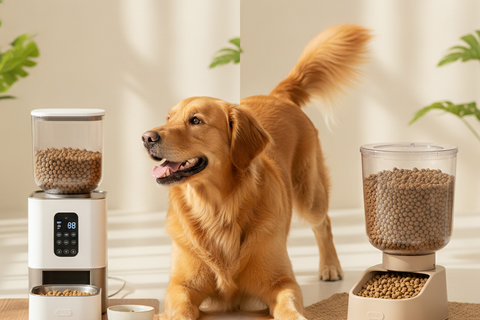
automatic cat feeder
Smart Automatic Pet Feeder vs. Gravity Feeder: Which is Best for Your Pet's Routine?
Jul 08, 2026
dog gear
Hiking with Your Dog: The Long Leash Dilemma Solved
Jul 08, 2026
mess solved
Paw Mess Solved
Jul 07, 2026
dog gear
Dog Eats Too Fast? Ragnor's Fix for Gulping & Bloat
Jul 07, 2026
beyond fetch
Summer Dog Games: Beyond Fetch
Jul 07, 2026
breathable dog car seat
Stay Cool on the Road: Top 5 Cooling Dog Car Seat Covers for Summer Adventures
Jul 07, 2026
invaders keep
Yard Invaders? How to Keep Stray Dogs Away (Kindly)
Jul 07, 2026
avoid drama
Clipping Dog Nails: Avoid the Drama & Do It Right
Jul 06, 2026
brachycephalic dog gear
Best No-Pull Harness for French Bulldogs: Comfort, Control & Style
Jul 06, 2026
bored dog
Bored Dog? Unleash Happiness with Vertical Play
Jul 06, 2026
clothes jackets
Best Dog Clothes & Jackets for Dogs: 2026 Guide
Jul 06, 2026
pet care gear
Best Portable Pet Water Bottle for Dogs: 2026 Guide
Jul 05, 2026
foes scratch
Furniture Foes: for Scratch-Proof Paws
Jul 05, 2026
best dog toys
The Ultimate Guide: Choosing Indestructible Dog Toys for Aggressive Chewers
Jul 05, 2026
dog gear
Unleash Their Inner Olympian: Home Agility for Any Dog
Jul 05, 2026
dog gear
Lost Dog Panic? GPS Trackers Actually Work. Here's How.
Jul 05, 2026
anxiety regular
Dog Anxiety: Why Regular Beds Aren't Enough
Jul 04, 2026
dog gear
Summer Dog Safety
Jul 04, 2026
automatic pet feeder
Smart Automatic Pet Feeder vs. Timed Feeder: Which is Best for Your Pet?
Jul 04, 2026
dog gear
Summer Walks: Give Your Dog Freedom (Safely!)
Jul 04, 2026
dog gear
Summer Frisbee Fun: A Dog's Guide to Outdoor Play
Jul 03, 2026
pet care gear
Summer Scratch Solutions
Jul 03, 2026
dog gear
Unleash Their Inner Olympian: DIY Dog Agility for Happy Paws
Jul 03, 2026
dog safety at night
Reflective Dog Leashes & Collars: Enhance Nighttime Safety
Jul 03, 2026
chews that
Problem solved: Chews that stand up to your power chewer
Jul 03, 2026
dog gear
Potty Training a Puppy? Why Litter Boxes Are a Bad Idea
Jul 02, 2026
pet care gear
Summer Road Trips: Protect Your Car Seats
Jul 02, 2026
color what
Dog Pee Color: What It's Telling You (And What to Do)
Jul 02, 2026
dog gear
Summer Shedding: Stop the Dog Hair Avalanche!
Jul 02, 2026
automatic ball launcher for dogs
Choosing the Right Automatic Ball Launcher for Dogs: Endless Playtime
Jul 02, 2026
clipping dog
Clipping Dog Nails: Why It's Hard & What Truly Helps
Jul 02, 2026
dog gear
Dog Parkour? Elevate Their Chill
Jul 01, 2026
board dogs
Best Cat Scratching Post & Board for Cats: 2026 Guide
Jul 01, 2026
aggressive chewers
Top 5 Indestructible Dog Toys for Power Chewers: Built to Last
Jul 01, 2026