
dog gear
dog health
inner olympian
Unleash Their Inner Olympian: DIY Dog Agility for Happy Paws

⚡ Quick Answer
Implementing dog agility training at home enhances a dog's physical fitness and mental sharpness. Focus on DIY obstacles made from safe, non-toxic materials, ensuring stability for dogs up to 80 lbs / 36 kg. Begin with basic commands and introduce obstacles gradually to build confidence and prevent injury, using FurryFable dog toys for motivation.
Dog agility training at home is highly effective for improving a dog's physical coordination, mental focus, and overall well-being. By utilizing common household items or simple DIY constructions, owners can create a stimulating course. This approach promotes a strong bond, reduces behavioral issues stemming from boredom, and keeps dogs, especially high-energy breeds like Border Collies and Australian Shepherds, mentally engaged and physically active. Always prioritize safety, proper technique, and positive reinforcement.
Quick Specs
| Parameter Category | Technical Specification and Safety Thresholds |
|---|---|
| Breed and Weight Fit | Suitable for dogs 15-80 lbs (7-36 kg), minimum 12 months old for jumps/weave poles. |
| Target Architecture | Modular, adjustable height, wide base for stability, clear obstacle paths. |
| Material Hardness | Obstacle bases: Shore D hardness 60-70 (e.g., PVC, robust plastics). Contact surfaces: Shore A hardness 80-90 (e.g., rubberized matting). |
| Fabric or Build Reinforcement | Double-stitched seams on tunnels, reinforced PVC joints, wide-stance supports for jumps and seesaws. |
| Chemical Safety | Non-toxic, lead-free, BPA-free plastics, formaldehyde-free wood finishes. |
| Price Spectrum | DIY materials: $20 to $100. Commercial entry-level sets: $100 to $300. |
Understanding the Benefits of Home Agility
Agility training offers multifaceted advantages beyond simple exercise. For breeds with high working drives, such as German Shepherds or Belgian Malinois, it fulfills an innate need for purpose. These dogs thrive on tasks that challenge their intellect and physical prowess. Regular agility sessions can significantly reduce instances of destructive chewing or excessive digging that stem from pent-up energy. Moreover, the focus required for navigating obstacles strengthens a dog's problem-solving abilities and enhances their overall obedience. It builds confidence, particularly in timid dogs, by teaching them to overcome perceived challenges. The activity also reinforces the bond between owner and dog through shared positive experiences and clear communication.Designing Your DIY Agility Course
Creating an effective and safe home agility course requires careful planning. You do not need expensive equipment. Many common household items or inexpensive materials can be repurposed. The key is stability, safety, and appropriate sizing for your dog's breed and physical capabilities. For instance, a Jack Russell Terrier will require different jump heights than a Great Dane. Always ensure materials are non-toxic and free of sharp edges.Jumps: The Foundation of Agility
Jumps are fundamental agility obstacles. For DIY jumps, consider using PVC pipes, broomsticks, or even sturdy cardboard boxes. The jump bar should be lightweight and easily dislodged to prevent injury if your dog hits it. For a medium-sized dog like a Labrador Retriever, start with a bar height of 6-8 inches (15-20 cm) and gradually increase it. The uprights can be made from buckets filled with sand for stability, or two stacked plastic crates. Ensure the jump bar rests on easily detachable supports, such as small pieces of PVC pipe or even paper towel rolls taped to the uprights, allowing it to fall if touched. This prevents impact injuries to legs or joints.Weave Poles: Developing Precision and Coordination
Weave poles are excellent for developing body awareness and precise movement. You will need 6-12 poles, spaced 20-24 inches (50-60 cm) apart for most medium to large breeds. Smaller breeds like Shetland Sheepdogs might use 18-inch spacing. PVC pipes (1-inch diameter, 3-4 feet long) cemented into small, heavy bases (like coffee cans filled with concrete) work well. Alternatively, garden stakes pushed firmly into the ground can suffice. Begin with fewer poles, guiding your dog through them in a serpentine pattern, using treats as a lure. The goal is fluid, independent weaving.Tunnels: Building Confidence and Speed
Tunnels provide an exciting challenge and build confidence. A child's play tunnel, available at toy stores, can serve as an excellent starting point. Look for tunnels that are at least 18-24 inches (45-60 cm) in diameter to accommodate most dogs comfortably, without being too restrictive for breeds like Golden Retrievers. Ensure the material is durable, tear-resistant, and free from loose threads that could snag claws. Place the tunnel on a flat, non-slip surface to prevent it from collapsing or rolling. Initially, use a short, straight tunnel and gradually introduce curves as your dog gains confidence.Seesaw or Teeter-Totter: Mastering Balance and Trust
A seesaw requires more construction but provides significant benefits for balance and trust. The FurryFable Dog Agility Seesaw - 71" Weather-Resistant Wood is an excellent commercial option, but a DIY version can be made from a sturdy plank of wood (e.g., 6-8 feet long, 10-12 inches wide, 0.75-1 inch thick) balanced on a stable pivot point, like a cinder block or a strong wooden box. Ensure the plank is securely attached to the pivot point, allowing it to tilt but not slide off. The contact surface should have a non-slip texture, such as rubber matting or sand mixed into paint, to provide traction for paws. Start with the seesaw barely off the ground, helping your dog walk over it, then gradually increase the tilt.📐 The Physics of Impact: Force and Pressure Distribution
Understanding the forces involved when a dog impacts an obstacle is crucial for preventing injury. The pressure exerted on a dog's joints and bones, especially during an accidental collision with a jump bar, can be quantified using the formula for pressure, P = F/A, where F is the force and A is the contact area. Reducing the force of impact and increasing the contact area minimizes localized stress.
P = FA
| Variable | Definition | Bad/Risky Scenario | Good/Safe Scenario |
|---|---|---|---|
| F (Force) | Impact force on obstacle. | Rigid, heavy jump bar hit by 60 lb (27 kg) dog at 5 mph (2.2 m/s): ~150 N. | Lightweight, break-away jump bar hit by same dog: ~15 N. |
| A (Area) | Contact area of impact. | Sharp edge of a metal obstacle: 0.1 sq inches (0.65 cm²). | Rounded, padded edge of obstacle: 1.0 sq inch (6.5 cm²). |
| P (Pressure) | Localized stress on dog's body. | 150 N / 0.65 cm² = 230 N/cm² (approx. 330 psi). | 15 N / 6.5 cm² = 2.3 N/cm² (approx. 3.3 psi). |
A dog impacting a rigid, sharp obstacle experiences localized pressure over 100× greater than with a properly designed, lightweight, and rounded obstacle, significantly increasing injury risk.
Safety First: Preventing Injuries
The excitement of agility can sometimes overshadow the need for safety. Proper warm-up and cool-down periods are crucial. A 5-10 minute brisk walk or light jog before training prepares muscles and joints. Similarly, a cool-down walk prevents stiffness. Always train on a non-slip surface, such as grass or a rubber mat. Avoid concrete or asphalt, which can be hard on joints, especially for breeds prone to orthopedic issues like German Shepherds. Supervise your dog closely. Never force them to perform an obstacle they are uncomfortable with. Use positive reinforcement, such as high-value treats and verbal praise, to build confidence. Monitor for signs of fatigue, lameness, or discomfort. Dehydration is another concern during active play, so ensure fresh water is always available. A portable pet water bottle is essential for longer sessions.Training Techniques for Success
Start simple. Introduce each obstacle individually, allowing your dog to explore it at their own pace. For jumps, begin with the bar on the ground, luring your dog over it. Gradually raise the bar in small increments. For weave poles, use the "channel method," where two rows of poles are set wide enough for your dog to run between them, then slowly moved closer together. Break down complex tasks into smaller, manageable steps. For instance, with the seesaw, first teach your dog to walk onto and off a flat plank, then introduce a slight wobble. Consistency is key. Short, frequent training sessions (5-10 minutes, 2-3 times a day) are more effective than long, infrequent ones. Always end on a positive note. If your dog is struggling, revert to an easier task they can succeed at, then end the session.💡 Ragnor's Trainer Pro-Tip
"Implement the 'Target Stick Method' for precision obstacle navigation. Hold a target stick (a dowel with a ball on the end) just beyond the point you want your dog to touch or move towards. As they nose-touch the target, reward immediately. This technique works by leveraging their natural curiosity and desire for reward, allowing you to shape complex behaviors like weave pole entry or precise contact zone hits on a seesaw, without physical manipulation."
, Ragnor, Pet Trainer & Animal Behaviorist, FurryFable
Why We Chose These for FurryFable
At FurryFable, Ragnor evaluated every product for safety, durability, and a dog's natural behavior. When selecting agility equipment or related training aids, the focus is on robust construction and non-toxic materials. For instance, the FurryFable Dog Agility Seesaw - 71" Weather-Resistant Wood was selected for its 0.75-inch thick, weather-resistant solid wood plank, supporting up to 150 lbs / 68 kg without flex, and its non-slip rubberized surface. This prevents splintering and provides critical paw grip, reducing the risk of slips or falls. The seesaw's 71-inch length provides ample space for larger breeds to learn balance. Similarly, Ragnor's pick for mental stimulation, the FurryFable Interactive Dog Puzzle Toy | Adjustable Levels, features food-grade, BPA-free polypropylene construction. Its seamless molded body eliminates interior corner seams where dirt or mold could accumulate, ensuring hygiene. The adjustable difficulty levels, from 1 to 3, allow for progressive mental challenge, which is crucial for dogs transitioning from basic obedience to agility tasks. The toy's non-slip rubber base prevents it from sliding during enthusiastic play, protecting both the dog and your flooring. These products meet stringent safety and functional criteria, ensuring they withstand vigorous use while promoting healthy development. Ragnor also curates a range of durable dog toys that serve as excellent rewards during training. Look for toys made from natural rubber or ballistic nylon, which can withstand the chewing of even power chewers like Rottweilers. These toys, such as the "FurryFable Indestructible Chew Ball", often feature Shore A hardness ratings of 60-70, providing a satisfying chew without posing a choking hazard. For high-drive breeds, an automatic ball launcher, like the FurryFable Automatic Dog Ball Launcher | Fetch for Small & Medium Dogs, can provide an additional outlet for energy, ensuring they're primed for focused agility work. This launcher features a robust ABS plastic casing and three adjustable launch distances (10, 20, 30 feet), catering to different outdoor spaces and energy levels, and includes six 2.5-inch diameter tennis balls designed for small to medium breeds.Advancing Your Agility Skills
Once your dog masters individual obstacles, begin combining them into short sequences. Start with two obstacles, then gradually add more. Focus on smooth transitions between obstacles. Use clear verbal cues and hand signals for each task. The goal is a fluid run, where your dog anticipates the next obstacle. Keep sessions fun and engaging. If your dog loses interest, take a break or switch to a different activity. Agility should always be a positive experience. Remember that consistency and patience are more important than speed or perfection. For dogs like Border Collies, who excel at complex tasks, consider introducing more advanced elements like a pause table or a tire jump. A pause table can be a sturdy, elevated platform (e.g., 24x24 inches, 12-16 inches high) where the dog learns to sit or lie down for a specified duration. For a tire jump, use a hula hoop or a bicycle tire suspended from a frame, ensuring it is at a safe height and easily breaks away. Always prioritize your dog's physical condition and age, avoiding high-impact activities for younger puppies whose growth plates are not yet closed, or older dogs with joint issues. For further reading on engaging your dog, refer to "Solving Destructive Chewing: The Ultimate Guide to Indestructible Dog Toys" or "Choosing the Right Automatic Ball Launcher for Dogs: Endless Playtime."Frequently Asked Questions
What age should a dog start agility training?
Most dogs can begin basic agility foundations, like walking over low obstacles or through short tunnels, around 6-8 months old. High-impact activities such as jumping or weaving should generally wait until 12-18 months of age, especially for larger breeds, to ensure their growth plates have fully closed and to prevent joint damage. Always consult your veterinarian before starting a new exercise regimen.
What essential equipment do I need for dog agility training at home?
For home agility, you'll need safe, stable obstacles like low jumps, weave poles, and a tunnel. DIY options include PVC pipes for jumps and weave poles, or a child's play tunnel. Consider durable, non-toxic dog toys for rewards and motivation. A seesaw, like the FurryFable Dog Agility Seesaw, offers advanced balance training.
How often should I practice agility with my dog?
Short, frequent sessions are more effective than long, infrequent ones. Aim for 10-15 minute sessions, 3-5 times a week. This maintains your dog's interest and prevents physical or mental fatigue. Consistency is key to building muscle memory and confidence.
How can I motivate my dog during agility training?
Motivation is crucial. Use high-value treats that your dog rarely gets, enthusiastic verbal praise, and favorite pet toys as rewards. Keep the training positive and fun. If your dog seems bored or frustrated, end the session and try again later, or switch to an easier task to rebuild their confidence.
What are common mistakes to avoid in home agility training?
Avoid forcing your dog, using negative reinforcement, or over-training. Do not start with obstacles that are too high or too complex. Ensure all DIY equipment is stable and safe, free from sharp edges or instability. Neglecting warm-up and cool-down periods can also lead to injury. Always prioritize your dog's physical and mental comfort.
FurryFable Recommendations
 FurryFable Dog Agility Seesaw - 71" Weather-Resistant Wood
 FurryFable Interactive Dog Puzzle Toy | Adjustable Levels
 FurryFable Automatic Dog Ball Launcher | Fetch for Small & Medium Dogs
★★★★★ 4.88 (32)
Save 34%$99.50 Shop Now
✓ Free USA Shipping✓ Fast Delivery✓ Secure Checkout✓ 100% Satisfaction
R
Ragnor
Pet Trainer & Animal Behaviorist
Ragnor is a certified pet trainer and animal behaviorist with over 10 years of experience helping dog and cat owners across North America find the right gear for their pets' specific breed needs and health conditions. Every recommendation on FurryFable is selected for safety, fit, and breed compatibility.
If you found this helpful, also read: FurryFable dog toys for motivation.
You Might Also Like
calming vest
Best Dog Anxiety Vest for Dogs: 2026 Guide
Sep 17, 2026
dog gear
Best Dog Puzzle Toy for Dogs: 2026 Guide
Sep 12, 2026
destroys toys
Why Your Dog Destroys Toys — & How to Finally Stop It
Sep 05, 2026
autumn puppy
Autumn Puppy Potty Training
Sep 05, 2026
collar leash
Best Dog Collar & Leash Set for Dogs: 2026 Guide
Sep 04, 2026
autumn dog
Autumn Dog Nail Care: Ditching the Drama & Embracing Healthy Paws
Sep 04, 2026
autumn dog
Autumn Dog Beds: Why Your Pup Still Gets Hot & How to Fix It
Sep 03, 2026
freedom fumble
Retractable Leashes: Freedom or Fumble?
Sep 03, 2026
bird gear
Best Chicken Coop Swing & Toy for Dogs: 2026 Guide
Sep 02, 2026
autumn paw
Autumn Paw Patrol: Stop Litter Tracks for Good
Sep 02, 2026
arms automatic
Tired Arms? Automatic Toys for Small Dogs That Actually Work
Sep 01, 2026
dog gear
Unleash Their Inner Athlete: Backyard Dog Agility Secrets
Sep 01, 2026
agility seesaw
Best Dog Agility Seesaw for Dogs: 2026 Guide
Aug 10, 2026
cat play
Dog-Proof Cat Play: Harmony in Your Shared Spaces
Aug 10, 2026
dog gear
Summer Dog Travel: for Stress-Free Adventures
Aug 10, 2026
anxious dog
Anxious Dog? : A Calming Bed That Actually Works
Jul 08, 2026
automatic cat feeder
Smart Automatic Pet Feeder vs. Gravity Feeder: Which is Best for Your Pet's Routine?
Jul 08, 2026
dog gear
Hiking with Your Dog: The Long Leash Dilemma Solved
Jul 08, 2026
mess solved
Paw Mess Solved
Jul 07, 2026
dog gear
Dog Eats Too Fast? Ragnor's Fix for Gulping & Bloat
Jul 07, 2026
beyond fetch
Summer Dog Games: Beyond Fetch
Jul 07, 2026
breathable dog car seat
Stay Cool on the Road: Top 5 Cooling Dog Car Seat Covers for Summer Adventures
Jul 07, 2026
invaders keep
Yard Invaders? How to Keep Stray Dogs Away (Kindly)
Jul 07, 2026
avoid drama
Clipping Dog Nails: Avoid the Drama & Do It Right
Jul 06, 2026
brachycephalic dog gear
Best No-Pull Harness for French Bulldogs: Comfort, Control & Style
Jul 06, 2026
bored dog
Bored Dog? Unleash Happiness with Vertical Play
Jul 06, 2026
clothes jackets
Best Dog Clothes & Jackets for Dogs: 2026 Guide
Jul 06, 2026
pet care gear
Best Portable Pet Water Bottle for Dogs: 2026 Guide
Jul 05, 2026
foes scratch
Furniture Foes: for Scratch-Proof Paws
Jul 05, 2026
best dog toys
The Ultimate Guide: Choosing Indestructible Dog Toys for Aggressive Chewers
Jul 05, 2026
dog gear
Unleash Their Inner Olympian: Home Agility for Any Dog
Jul 05, 2026
dog gear
Lost Dog Panic? GPS Trackers Actually Work. Here's How.
Jul 05, 2026
anxiety regular
Dog Anxiety: Why Regular Beds Aren't Enough
Jul 04, 2026
dog gear
Summer Dog Safety
Jul 04, 2026
automatic pet feeder
Smart Automatic Pet Feeder vs. Timed Feeder: Which is Best for Your Pet?
Jul 04, 2026
dog gear
Summer Walks: Give Your Dog Freedom (Safely!)
Jul 04, 2026
dog gear
Summer Frisbee Fun: A Dog's Guide to Outdoor Play
Jul 03, 2026
pet care gear
Summer Scratch Solutions
Jul 03, 2026
dog safety at night
Reflective Dog Leashes & Collars: Enhance Nighttime Safety
Jul 03, 2026
chews that
Problem solved: Chews that stand up to your power chewer
Jul 03, 2026
dog gear
Potty Training a Puppy? Why Litter Boxes Are a Bad Idea
Jul 02, 2026
pet care gear
Summer Road Trips: Protect Your Car Seats
Jul 02, 2026
color what
Dog Pee Color: What It's Telling You (And What to Do)
Jul 02, 2026
dog gear
Summer Shedding: Stop the Dog Hair Avalanche!
Jul 02, 2026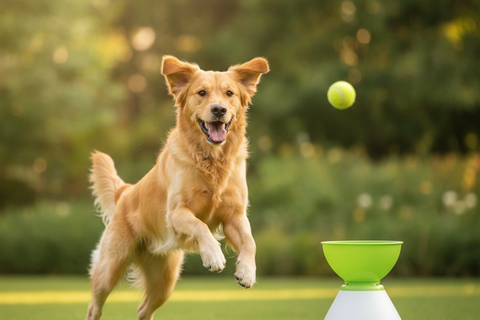
automatic ball launcher for dogs
Choosing the Right Automatic Ball Launcher for Dogs: Endless Playtime
Jul 02, 2026
clipping dog
Clipping Dog Nails: Why It's Hard & What Truly Helps
Jul 02, 2026
dog gear
Dog Parkour? Elevate Their Chill
Jul 01, 2026
board dogs
Best Cat Scratching Post & Board for Cats: 2026 Guide
Jul 01, 2026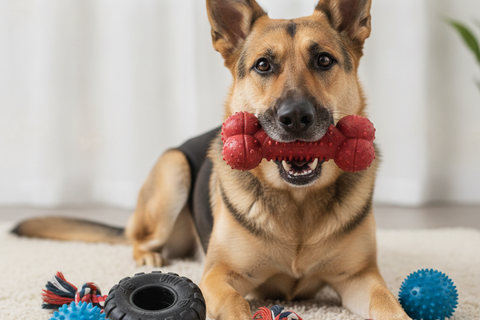
aggressive chewers
Top 5 Indestructible Dog Toys for Power Chewers: Built to Last
Jul 01, 2026