
dog gear
dog health
hiking dog
Hiking with Your Dog: The Long Leash Dilemma Solved

⚡ Quick Answer
A long dog leash for hiking should be 15 to 30 feet in length, constructed from durable nylon or biothane webbing rated for at least 250 lbs tensile strength, and feature a robust, corrosion-resistant hardware. This length provides necessary freedom for exploration while maintaining safety and control on varied terrain, crucial for breeds like Golden Retrievers or German Shepherds who benefit from extended scent-tracking opportunities. Find suitable options at FurryFable Harness & Leash Collection.
For hiking, a long dog leash should be between 15 to 30 feet, made from durable, weather-resistant materials like biothane or heavy-duty nylon webbing. It must feature strong, lightweight hardware and a comfortable, secure handle. The ideal leash provides freedom for natural exploration while allowing the handler to maintain control and recall, especially important for breeds like Border Collies or Australian Shepherds that thrive on mental and physical engagement.
Quick Specs
| Parameter Category | Technical Specification and Safety Thresholds |
|---|---|
| Breed and Weight Fit | Medium to large breeds, 25-100 lbs (11-45 kg); suitable for strong pullers like Huskies or Labs. |
| Target Architecture | Single-strap, non-retractable or retractable with robust internal spring mechanism and locking brake. Lengths from 15 ft to 30 ft. |
| Material Hardness | Nylon webbing with 250-500 lb tensile strength; Biothane coated webbing, Shore A hardness 80-85; Stainless steel or zinc alloy hardware. |
| Fabric or Build Reinforcement | Heavy-duty box-stitching at stress points, reinforced handle loop, anti-tangle swivel clasp. |
| Chemical Safety | Non-toxic dyes, lead-free hardware, BPA-free biothane coating. |
| Price Spectrum | $15 to $45 per item |
The Hazards of Inappropriate Leash Length on Trails
Using the wrong leash length during a hike can create significant safety risks for both dog and handler. A standard 6-foot leash, while excellent for urban environments, severely limits a dog's ability to explore natural scents and terrain. For breeds like Beagles or Basset Hounds, whose primary method of interacting with their environment is through olfaction, this restriction can lead to frustration, pulling, and a less enriching experience. Their powerful noses are designed to track complex scent trails over distances, and a short leash actively hinders this innate behavior. Conversely, an excessively long leash, perhaps 50 feet or more, can be unwieldy on anything but the most open, flat terrain. On winding trails with dense vegetation, a very long leash becomes a tripping hazard for the handler, entanglement risk for the dog, and a potential danger to wildlife or other trail users. For a high-energy breed such as a German Shorthaired Pointer, capable of bursts of speed up to 35 mph, such a leash can allow them to gain too much momentum, making it difficult for the handler to safely stop them or redirect their attention before they encounter a hazardous situation. The primary goal is controlled freedom, not unrestrained movement.📐 The Physics of Impulse: Force, Mass, and Time
When a dog reaches the end of its leash, the sudden stop generates an impulse force. This force, which can cause injury, is directly related to the dog's mass, its velocity, and the short duration of the stop, as described by Newton's impulse-momentum theorem.
F = ΔpΔt = m·vt
| Variable | Definition | Bad/Risky Scenario | Good/Safe Scenario |
|---|---|---|---|
| F | Force (Newtons) | 2000 N (450 lbs of force) | 200 N (45 lbs of force) |
| m | Mass (kg) | 30 kg (66 lbs) dog | 30 kg (66 lbs) dog |
| v | Velocity (m/s) | 5 m/s (11.2 mph) | 1 m/s (2.2 mph) |
| t | Time of impact (s) | 0.075 s (sudden stop) | 0.75 s (gradual stop) |
A 66 lb dog running at 11.2 mph and stopping suddenly generates 10× more force (450 lbs) than a dog moving at 2.2 mph with a gradual stop (45 lbs).
Identifying the Right Leash for Your Hiking Dog
The key to solving the long leash dilemma lies in selecting a leash that offers flexibility in length, superior durability, and ergonomic handling. For breeds with powerful builds, such as Rottweilers or Great Danes, a leash must withstand substantial force without fraying or breaking. Their muscular necks and shoulders mean a sudden stop can translate into significant tension on the leash and harness. Consider the material. Standard nylon leashes are common, but for hiking, opt for heavy-duty nylon webbing with a minimum tensile strength of 500 lbs. Biothane is another excellent choice; it is a coated webbing that offers the look and feel of leather but is waterproof, odor-proof, and exceptionally durable. This makes it ideal for muddy trails or wet conditions that would degrade traditional nylon or leather over time, particularly important for water-loving breeds like Newfoundlands or Portuguese Water Dogs. The hardware is equally important. Avoid plastic clips or lightweight aluminum. Instead, look for solid brass, stainless steel, or heavy-duty zinc alloy clasps that are corrosion-resistant and rated for at least twice your dog's weight. A swivel clasp is essential to prevent tangles, especially on a long dog leash for hiking, as dogs will inevitably circle trees or sniff around obstacles. The handle should be comfortable, ideally padded, to prevent hand strain and rope burn during extended use or unexpected pulls from a strong breed like a Siberian Husky.Adjustable Leash Systems: The Solution
For most hiking scenarios, a leash that can adjust its length is the ultimate solution. These systems allow you to quickly shorten the leash when passing other hikers or navigating technical terrain, and extend it when your dog has ample space to explore. There are two primary types of adjustable long leashes for hiking:- Multi-Ring Leashes: These leashes feature several D-rings spaced along their length. You can clip the handle to different rings to create varying lengths or even wear the leash around your waist for hands-free hiking. This design is simple, robust, and less prone to mechanical failure than retractable systems. For a Golden Retriever, a 15-foot multi-ring leash allows freedom for scent work off-trail but can be quickly shortened to 6 feet when encountering wildlife.
- Retractable Leashes (with caveats): While often maligned, modern retractable leashes have improved significantly. The "FurryFable Retractable Dog Leash – One-Touch Brake, Tangle-Free" is an example of a well-engineered option. It features a strong internal spring mechanism, a robust casing, and a reliable one-touch brake. The key is to use them responsibly. A quality retractable leash allows you to instantly lock the leash at any length, offering precise control. However, they are generally not suitable for dogs that are inconsistent with recall or those prone to sudden, powerful lunges, as the impulse force can be significant. For a well-trained Cocker Spaniel, a retractable leash might offer the perfect balance of freedom and control on a wide, open trail, but a sustained pull from a larger breed could damage the mechanism or injure the handler.
Why We Chose These for FurryFable
At FurryFable, our selection process for hiking leashes emphasizes safety, durability, and ergonomic design, specifically considering the demands of varied canine breeds and challenging environments. We evaluate products based on their material specifications, construction integrity, and practical application. For example, the "FurryFable Reflective Dog Leash: Soft Foam Handle & No-Slip Grip" was selected for its 1-inch wide, 750-denier woven nylon webbing, which provides a tensile strength exceeding 600 lbs (272 kg). This robust construction ensures it can safely manage dogs up to 100 lbs (45 kg) without risk of breakage. The leash features a 6061-T6 aircraft-grade aluminum swivel clasp, reducing twisting and binding, and is rated for 400 lbs (181 kg) of direct pull force. Its 6-foot length is enhanced with a high-visibility reflective stripe, using 3M Scotchlite material, ensuring visibility up to 500 feet (152 meters) in low light. The handle is lined with a 0.5-inch thick closed-cell foam, preventing rope burn and distributing pressure evenly across the hand during strong pulls, which is crucial for maintaining control over a strong breed like a Pit Bull. This leash exemplifies the balance between strength and comfort needed for active use. When evaluating a long dog leash for hiking, Ragnor also considers the "FurryFable Waterproof Silicone Dog Collar & Leash Set – Easy Clean." While primarily a collar and leash set, the leash component's construction merits attention. It features a 0.75-inch wide, Shore A hardness 80 biothane-coated webbing. This material is inherently waterproof and odor-proof, making it ideal for muddy trails or stream crossings that often degrade traditional nylon or leather. The leash's stainless steel D-ring and buckle are rust-resistant and rated for 200 lbs (90 kg) of tensile strength. The seamless molded body of the biothane prevents water absorption and bacterial growth, offering a hygienic and durable solution for breeds like Labrador Retrievers who frequently encounter wet conditions. The leash measures 5 feet in length, providing ample control for close-quarters hiking. Our commitment is to provide products that meet stringent safety criteria and enhance the hiking experience. Each product must demonstrate superior resistance to abrasion, UV degradation, and moisture, ensuring longevity and consistent performance across diverse outdoor conditions.💡 Ragnor's Trainer Pro-Tip
"Implement the 'Leash Pressure Release' technique to teach your dog to respond to leash tension. When your dog pulls, stop moving. The instant they relieve tension on the leash, even slightly, immediately release the pressure by taking a step forward or offering a verbal marker. This teaches them that slack equals forward movement, leveraging negative reinforcement to encourage a loose leash without harsh corrections."
, Ragnor, Pet Trainer & Animal Behaviorist, FurryFable
Training Considerations for a Long Leash
A long dog leash for hiking is a tool, not a substitute for training. Before embarking on a hike with an extended leash, ensure your dog has a solid grasp of recall commands. A reliable "come" or "here" is paramount when you need to quickly bring your dog back from a potentially dangerous situation, such as an encounter with wildlife or another hiker. Practice recall in progressively more distracting environments. Additionally, teach your dog leash manners even on a long line. While the goal is freedom, your dog should still understand that pulling excessively is not acceptable. Implement a "check-and-release" method, where a gentle, consistent pressure is applied and immediately released when your dog responds by slackening the leash. This teaches them to yield to pressure rather than resist it. For breeds like Australian Shepherds, who are highly intelligent and eager to please, consistent positive reinforcement for loose-leash walking even on a long line yields excellent results. Consider pairing a long leash with a comfortable, well-fitting harness rather than a collar. A no-pull harness, such as the ones described in our guide, "Best No-Pull Harness for Golden Retrievers: Comfort & Control," distributes pressure across the chest and shoulders, reducing strain on the neck and trachea. This is especially important for breeds prone to tracheal collapse, like Yorkshire Terriers, or those with brachycephalic syndromes, such as French Bulldogs, where neck pressure can exacerbate breathing difficulties.Choosing the Right Length for Your Dog and Environment
The ideal length of a long dog leash for hiking depends heavily on your dog's training, the trail conditions, and local regulations.- 15-foot leash: This length offers a good balance for most trails and dogs. It provides more freedom than a standard leash but is still manageable in moderate brush or when passing others. It’s a versatile choice for breeds like Border Collies who need space to explore but also respond well to commands.
- 20-foot leash: Ideal for more open trails, beaches, or large fields where your dog can roam further while still remaining within your control. This length is excellent for scent-driven breeds like scent hounds, allowing them to follow a trail without pulling you into the bushes.
- 30-foot leash: Best for highly trained dogs in very open, low-traffic areas. This length requires a handler with excellent recall and physical strength, especially if managing a larger breed like a Mastiff. It offers maximum exploration but also the greatest potential for entanglement or loss of control if not used carefully.
Final Considerations for a Safe Hike
Beyond the leash, ensure you have other essential hiking gear. A portable water bottle from our waterBottle collection is crucial for hydration, especially for active breeds like German Shepherds. Consider a dog backpack for your dog to carry their own water and collapsible bowl, as detailed in our "Best Dog Backpacks for Hiking & Adventures: Carry Your Essentials" blog post. Always pack a basic first-aid kit for both you and your dog, including paw protection, antiseptic wipes, and bandages. Ultimately, the goal of a long dog leash for hiking is to enhance your dog's outdoor experience safely. By understanding the physics of force, selecting the right materials, and committing to consistent training, you can confidently provide your dog with the freedom they crave on the trails. Explore our full range of durable and ergonomic leashes and harnesses designed for every adventure at FurryFable's Harness & Leash Collection.Frequently Asked Questions
What is the safest length for a long dog leash for hiking?
The safest length for a long dog leash for hiking generally falls between 15 to 30 feet. This range provides a good balance between freedom for exploration and maintaining control, minimizing the risk of entanglement or excessive force if your dog reaches the end of the line. For densely wooded trails, a 15-foot leash is often more manageable, while open fields might allow for a 20 or 30-foot option. Always prioritize your dog's recall training when using longer leashes.
Are retractable leashes safe for hiking with a strong dog?
Retractable leashes are generally not recommended for hiking with strong dogs or those with inconsistent recall. The sudden stop at the end of a retractable leash can generate significant impulse force, potentially causing neck injuries to the dog or hand injuries to the handler. While some modern retractable leashes, like the FurryFable Ret retractable Dog Leash – One-Touch Brake, Tangle-Free, offer improved braking mechanisms, a fixed-length long line or multi-ring leash is often a safer choice for powerful breeds like Rottweilers or Great Danes, especially on uneven terrain. For more robust options, see our Harness & Leash collection.
What materials are best for a durable hiking leash?
For a durable hiking leash, look for materials such as heavy-duty nylon webbing, often 750-denier or higher, or biothane-coated webbing. Nylon offers excellent tensile strength and abrasion resistance, while biothane is waterproof, odor-proof, and easy to clean, making it ideal for wet or muddy conditions. Hardware should be solid brass, stainless steel, or heavy-duty zinc alloy, rated for at least double your dog's weight, to prevent corrosion and failure. Avoid plastic components for critical stress points.
How can I prevent my dog from getting tangled on a long leash while hiking?
To prevent tangles on a long leash, use a leash with a swivel clasp that allows the leash to rotate freely. Practice guiding your dog around obstacles, rather than letting them circle. For dogs that frequently wrap around trees, shorten the leash temporarily when navigating dense areas. Consistent training on loose-leash walking and recall will also help your dog stay closer and more aware of their surroundings, reducing entanglement opportunities. Consider a no-pull harness to improve control and comfort, such as options discussed in "Best No-Pull Harness for French Bulldogs: Comfort, Control & Style".
Should I use a collar or harness with a long hiking leash?
For hiking with a long leash, a well-fitting harness is almost always preferred over a collar. A harness distributes pressure across your dog's chest and shoulders, reducing strain on the neck and trachea, especially if they hit the end of the long leash suddenly. This is crucial for breeds susceptible to neck injuries or respiratory issues. A front-clip harness can also help with managing pulling, providing better control and comfort for both you and your dog on the trail.
FurryFable Recommendations
 FurryFable Retractable Dog Leash – One-Touch Brake, Tangle-Free
★★★★★ 4.95 (19)
Save 32%$16.50 Shop Now
 FurryFable Waterproof Silicone Dog Collar & Leash Set – Easy Clean
★★★★★ 5 (25)
Save 32%$29.00 Shop Now
 FurryFable Reflective Dog Leash: Soft Foam Handle & No-Slip Grip
★★★★★ 4.96 (25)
Save 32%$14.80 Shop Now
✓ Free USA Shipping✓ Fast Delivery✓ Secure Checkout✓ 100% Satisfaction
R
Ragnor
Pet Trainer & Animal Behaviorist
Ragnor is a certified pet trainer and animal behaviorist with over 10 years of experience helping dog and cat owners across North America find the right gear for their pets' specific breed needs and health conditions. Every recommendation on FurryFable is selected for safety, fit, and breed compatibility.
If you found this helpful, also read: Best No-Pull Dog Harness for German Shepherds.
If you found this helpful, also read: essential reflective dog leashes.
You Might Also Like

calming vest
Best Dog Anxiety Vest for Dogs: 2026 Guide
Sep 17, 2026
dog gear
Best Dog Puzzle Toy for Dogs: 2026 Guide
Sep 12, 2026
destroys toys
Why Your Dog Destroys Toys — & How to Finally Stop It
Sep 05, 2026
autumn puppy
Autumn Puppy Potty Training
Sep 05, 2026
collar leash
Best Dog Collar & Leash Set for Dogs: 2026 Guide
Sep 04, 2026
autumn dog
Autumn Dog Nail Care: Ditching the Drama & Embracing Healthy Paws
Sep 04, 2026
autumn dog
Autumn Dog Beds: Why Your Pup Still Gets Hot & How to Fix It
Sep 03, 2026
freedom fumble
Retractable Leashes: Freedom or Fumble?
Sep 03, 2026
bird gear
Best Chicken Coop Swing & Toy for Dogs: 2026 Guide
Sep 02, 2026
autumn paw
Autumn Paw Patrol: Stop Litter Tracks for Good
Sep 02, 2026
arms automatic
Tired Arms? Automatic Toys for Small Dogs That Actually Work
Sep 01, 2026
dog gear
Unleash Their Inner Athlete: Backyard Dog Agility Secrets
Sep 01, 2026
agility seesaw
Best Dog Agility Seesaw for Dogs: 2026 Guide
Aug 10, 2026
cat play
Dog-Proof Cat Play: Harmony in Your Shared Spaces
Aug 10, 2026
dog gear
Summer Dog Travel: for Stress-Free Adventures
Aug 10, 2026
anxious dog
Anxious Dog? : A Calming Bed That Actually Works
Jul 08, 2026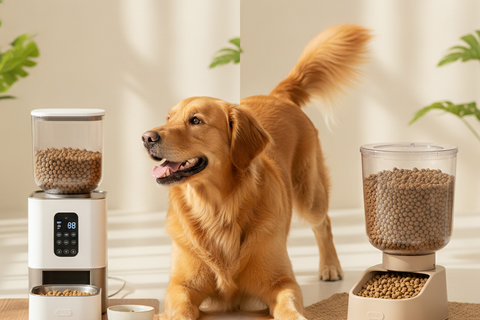
automatic cat feeder
Smart Automatic Pet Feeder vs. Gravity Feeder: Which is Best for Your Pet's Routine?
Jul 08, 2026
mess solved
Paw Mess Solved
Jul 07, 2026
dog gear
Dog Eats Too Fast? Ragnor's Fix for Gulping & Bloat
Jul 07, 2026
beyond fetch
Summer Dog Games: Beyond Fetch
Jul 07, 2026
breathable dog car seat
Stay Cool on the Road: Top 5 Cooling Dog Car Seat Covers for Summer Adventures
Jul 07, 2026
invaders keep
Yard Invaders? How to Keep Stray Dogs Away (Kindly)
Jul 07, 2026
avoid drama
Clipping Dog Nails: Avoid the Drama & Do It Right
Jul 06, 2026
brachycephalic dog gear
Best No-Pull Harness for French Bulldogs: Comfort, Control & Style
Jul 06, 2026
bored dog
Bored Dog? Unleash Happiness with Vertical Play
Jul 06, 2026
clothes jackets
Best Dog Clothes & Jackets for Dogs: 2026 Guide
Jul 06, 2026
pet care gear
Best Portable Pet Water Bottle for Dogs: 2026 Guide
Jul 05, 2026
foes scratch
Furniture Foes: for Scratch-Proof Paws
Jul 05, 2026
best dog toys
The Ultimate Guide: Choosing Indestructible Dog Toys for Aggressive Chewers
Jul 05, 2026
dog gear
Unleash Their Inner Olympian: Home Agility for Any Dog
Jul 05, 2026
dog gear
Lost Dog Panic? GPS Trackers Actually Work. Here's How.
Jul 05, 2026
anxiety regular
Dog Anxiety: Why Regular Beds Aren't Enough
Jul 04, 2026
dog gear
Summer Dog Safety
Jul 04, 2026
automatic pet feeder
Smart Automatic Pet Feeder vs. Timed Feeder: Which is Best for Your Pet?
Jul 04, 2026
dog gear
Summer Walks: Give Your Dog Freedom (Safely!)
Jul 04, 2026
dog gear
Summer Frisbee Fun: A Dog's Guide to Outdoor Play
Jul 03, 2026
pet care gear
Summer Scratch Solutions
Jul 03, 2026
dog gear
Unleash Their Inner Olympian: DIY Dog Agility for Happy Paws
Jul 03, 2026
dog safety at night
Reflective Dog Leashes & Collars: Enhance Nighttime Safety
Jul 03, 2026
chews that
Problem solved: Chews that stand up to your power chewer
Jul 03, 2026
dog gear
Potty Training a Puppy? Why Litter Boxes Are a Bad Idea
Jul 02, 2026
pet care gear
Summer Road Trips: Protect Your Car Seats
Jul 02, 2026
color what
Dog Pee Color: What It's Telling You (And What to Do)
Jul 02, 2026
dog gear
Summer Shedding: Stop the Dog Hair Avalanche!
Jul 02, 2026
automatic ball launcher for dogs
Choosing the Right Automatic Ball Launcher for Dogs: Endless Playtime
Jul 02, 2026
clipping dog
Clipping Dog Nails: Why It's Hard & What Truly Helps
Jul 02, 2026
dog gear
Dog Parkour? Elevate Their Chill
Jul 01, 2026
board dogs
Best Cat Scratching Post & Board for Cats: 2026 Guide
Jul 01, 2026
aggressive chewers
Top 5 Indestructible Dog Toys for Power Chewers: Built to Last
Jul 01, 2026